
Summary generated by Gemini AI
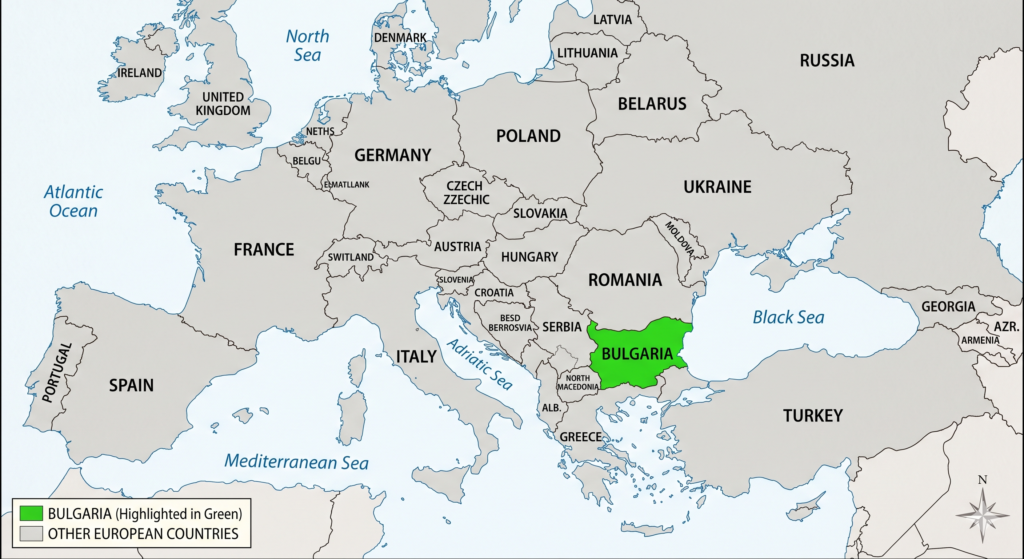
Sunday’s parliamentary election in Bulgaria (April 19, 2026) delivered a seismic shift in the country’s political landscape, effectively ending a five-year cycle of instability and repeat elections.
The clear winner was Progressive Bulgaria (PB), a new party led by former President Rumen Radev. Radev recently stepped down from the presidency specifically to run for the more powerful role of Prime Minister.
Key Election Results
The preliminary results indicate a landslide victory for Radev’s party, marking the first time since 1997 that a single party has secured an outright majority in the Bulgarian parliament.
| Party | Leader | Vote Share | Est. Seats (out of 240) |
| Progressive Bulgaria (PB) | Rumen Radev | ~44.6% | 130 |
| GERB-SDS | Boyko Borissov | ~13.4% | 39 |
| PP-DB | Nikolai Denkov | ~12.6% | 37 |
| DPS | Delyan Peevski | ~7.0% | 21 |
| Revival | Kostadin Kostadinov | ~4.2% | 13 |
What This Means for Bulgaria
- End of Political Deadlock: This was Bulgaria’s eighth election in five years. Radev’s outright majority (121 seats are needed to govern) suggests he will be able to form a stable government without the fragile coalitions that plagued his predecessors.
- Anti-Corruption Mandate: Radev campaigned heavily on “dismantling the oligarchic model,” capitalizing on public anger that led to mass protests and the resignation of the previous conservative government in late 2025.
- High Voter Engagement: Turnout exceeded 50%, a significant jump compared to recent elections, indicating that the Bulgarian public viewed this as a “decisive” moment.
Potential Tensions Ahead
Despite the clear mandate, Radev’s victory has sparked international and domestic debate due to his “strategic ambiguity”:
- Stance on Russia: Radev has historically been viewed as “Moscow-friendly.” He has previously opposed sending military aid to Ukraine and has called for resuming dialogue with Russia. Critics fear Bulgaria may move closer to the orbit of leaders like Slovakia’s Robert Fico.
- European Alignment: While Radev has pledged to keep Bulgaria on its “European path,” he has been critical of Brussels’ pragmatism. His victory comes just months after Bulgaria officially adopted the Euro in January 2026—a move he previously questioned.
- Constitutional Reform: While he has enough seats to govern, he lacks the 160-seat supermajority required for deep judicial reforms. He may still need to cooperate with the reformist PP-DB bloc to achieve his promised “clean-up” of the legal system.
Note: Former Prime Minister Boyko Borissov conceded defeat on Monday, noting that while winning is one thing, “governing is another.” All eyes are now on Radev as he transitions from the ceremonial role of President to the executive power of the Prime Ministry.